Handy Hazardous Area Classification Guide

The electrical classification term "Hazardous Location" refers to areas where flammable gases, vapors, liquids, combustible dusts, ignitable fibers or flyings are present in the atmosphere in sufficient volume to cause an explosion of fire.

Electrical equipment placed in hazardous locations must be carefully selected and applied in accordance with national and international "HazLoc" (sometimes referred to as explosion-proof) standards. These standards evaluate the threat of explosion based on quantitative and qualitative criteria such as material phase, specific gas of liquid, and likelihood of exposure.

SOR, a world leading manufacturer of process control instrumentation, offers a handy quick reference page on their website. For your convenience, we are including a link below to the PDF version on the Instrument Specialties website for download.


This guide is just for reference. Consultation with a qualified applications specialist prior to the selection or installation of any hazardous area product is strongly suggested.

For more information, contact Instrument Specialties, Inc. by calling 407-324-7800 or by visiting http://isi.group

AUMA Authorized Service, Repair and Maintenance in Florida

AUMA Authorized Service
AUMA is a world–renowned manufacturer of electric actuators for the municipal water and wastewater industry. Their electric actuators operate a wide variety of quarter-turn, multi-turn and linear valves.

Instrument Specialties, Inc. is the exclusive Auma Electric Actuator Municipal Sales and Service Representative in Florida.  We look forward to being your partner for the installation, commissioning, training, maintenance, overhaul or repair of your AUMA actuators.

Aside from sales, Instrument Specialties offers a broad scope of after-sales services for AUMA actuators including, consulting, assembly, spare parts, inspection, maintenance, modernization, onsite mounting, optimization and personnel training.

Advantages of Partnering with Instrument Specialties for all your AUMA Service:
  • One partner for all AUMA service requirements.
  • Local, prompt availability.
  • OEM guaranteed spare parts.
  • Service by fully trained and AUMA qualified technicians.
  • Thorough record keeping.


Crispin Valve: Air Valves, Butterfly Valves, Check Valves, and Plug Valves


Crispin Valve manufactures air valves, butterfly valves, check valves, and plug valves primarily for the municipal water industries. Other markets where Crispin valves are used: mining, energy and chemical processing companies. 

For more information about Crispin Valve, contact:
Instrument Specialties, Inc.
407-324-7800

KROHNE SMARTPAT Process Analytics Sensors


The KROHNE SMARTPAT is a series of digital 2-wire loop powered sensors with integrated transmitter technology. Using a VP cable, any SMARTPAT sensor can be connected directly to the process control system via 4-20 mA / HART 7 interface, which provides a large advantages in both handling and costs of a measuring point. Available in pH, ORP, Conductivity, Total Suspended Solids, Oxygen, Disinfectant, and Turbidity. Additional transmitters on site are no longer necessary. All SMARTPAT sensors can be configured and calibrated offline via PACTware FDT/DTM, on site with a HART handheld, or an optional loop powered operating unit.

Instrument Specialties, Inc.
http://isi.group
407-324-7800

SUPERIOR Water Solutions Gas Chlorinators

SUPERIOR Gas Chlorinator
The SUPERIOR Gas Chlorinator is con­sidered the industry "workhorse" of gas chlorinators. The efficient design, coupled with the long lasting materials, creates reliable water disinfection systems with a safety first, user friendly design that is cost effective to install and so easy to operate and maintain. The SUPERIOR Gas Chlorinator is the optimum choice for water disinfection, whether for drink­ ing water, sewage treatment, industrial processes, food pro­cessing, cooling water, or swimming pools.

The vacuum-operated, solution feed type SUPERIOR Gas Chlorinator can be either mounted directly on a chlorine cylin­der valve, or wall mounted. Chlorine flow rate is manually adjusted. The design is such that a number of automatic flow rate control devices can be easily added. Modern mod­ular design makes it easy and cost-effective to expand or upgrade the system.

Download the complete SUPERIOR Gas Chlorinator brochure.

For more information, contact Instrument Specialties, Inc. by calling 407-324-7800 or visiting their website at http://isi.group.

Influent Flow Monitoring at Wastewater Treatment Plant

Influent Flow Monitoring
Figure 1: Signature flow meter  with LaserFlow
sensor sheltered in weather enclosure.
Four Teledyne ISCO Signature Flow Meters, each configured with 360 LaserFlow sensors, were installed at the inlet of a very large wastewater treatment plant (WWTP). This flow monitoring technology provided a unique solution for the challenging flow conditions at this site. Non-contact Doppler laser technology was chosen by the user for their continuous and maintenance free flow monitoring.

Inlet Section Overview

Flow monitoring in the wastewater treatment process is key for verifying performance of the plant as a whole, as well as its individual processing sections. Due to the enormity of the plant’s processing capacity sewage streams are transferred to the plant through different main sewers, which merge into four rectangular inlet channels, each with a width of 1.5 m. At this location, the Signature flow meters and their non-contact LaserFlow sensors were installed over each of four inlet channels and sheltered in all-weather enclosures (Figure1).

Influent Flow Monitoring
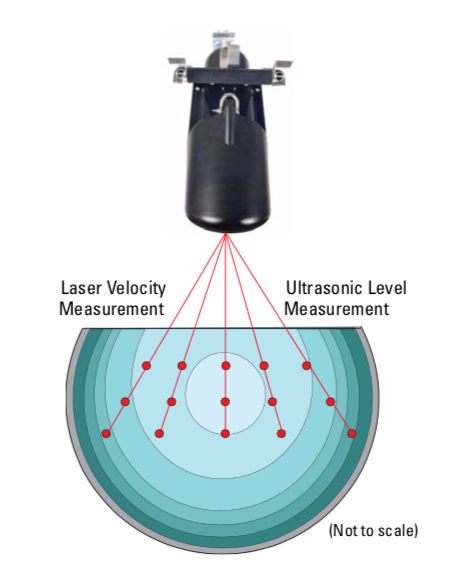
Figure 2: Multi-point/Multi-depth velocity method.
Site Challenges

Sludge buildup at the bottom of the channels and high sediment concentration in the flow streams were the major problems for continuous flow rate measurement. The performance of submersible, continuous wave Doppler sensors, previously installed at the site, had been adversely affected by site conditions and required costly maintenance.

Finding the Solution with LaserFlow

The Teledyne Isco distributor recommended using the non-contact LaserFlow sensor at the site. The conditions at the bottom of the channels were less than ideal for traditional flow monitoring. Being placed over the channel LaserFlow overcomes this. First, the unit’s built-in ultra-sonic level transducer determines the stream’s level. This is done by emitting an ultrasonic pulse and measuring the time it takes for the echo to return from the stream’s surface. By using ultrasonic level measurement the sensor can calculate a subsurface point at which to focus an optical laser. The frequency shift (Doppler shifting) of the returned light from the laser is proportionate to the water’s velocity. LaserFlow is able to measure velocities at up to fifteen points below the water’s surface. Being able to measure at multiple points minimizes the effects of turbulence and eliminates the need for manual profiling. Above average results are achieved by producing a level measurement and an exceptionally accurate mean velocity reading.

Measuring Results and Feedback
Influent Flow Monitoring
Figure 3: Flow Rate Measuring Results for four
inlet channels in dry weather conditions.

Thanks to its non-contact technology for velocity and level measurement, the Signature configured with a LaserFlow was capable of providing consistent and continuous flow rate results (Figure 3).

The end-user was able to reduce costs of service by limiting site visits to periodic inspections of the LaserFlow without the need for stopping flow, entering into the manhole and/or cleaning the sensors.

For more information, contact Instrument Specialties, Inc. by calling  407-324-7800 or visiting http://isi.group.