Showing posts with label wastewater treatment. Show all posts

AUMA Electric Actuators for Critical Flow Control, Safety, and Security in the Water Industry

AUMA Electric Actuators

Potable water production, distribution, sewage treatment, and disposal are core tasks of modern water management. Drinking water abstraction, distribution, sewage disposal, and purification are fundamental prerequisites for infrastructure development. Security of supply is crucial for the modern water industry, and valves and actuators play a critical role in water management.

From individual actuators for municipal sewage treatment plants to major projects combining several hundreds of units, from the small butterfly valves and ball valves to weirs several meters high, valve actuators provide critical flow control, environmental protection, and safety.

Electric actuators are the well-established standard in the water industry.  Piping of different lengths and nominal diameters with many valve types must be automated. Electric actuators are also widely used in steel construction operating weirs and sluice gates for water systems.  Decades of developments in multi-turn, part-turn, linear actuators, valve communications, corrosion protection, and service life implanted electric actuators as the water industry standard.

AUMA, a leader in the long-term development of actuators for the water industry, earned themselves an excellent reputation by meeting the unique challenges and finding the perfect water management and treatment solutions. The AUMA brand is a synonym for long service life and ruggedness. AUMA provides solutions for all customer demands. Their modular products, control technology, and integration into established PLC control concepts or the latest Fieldbus technology are easy to retrofit in an existing installation when upgrading with modern actuation.

For more information about AUMA Actuators for the water industry in Florida, contact Instrument Specialties. Call them at 407-324-7800 or visit https://isisales.com.

AUMA Electric Actuators for the Water Industry

Clean water is the basis of all life. Potable water production and distribution, sewage treatment, and disposal are core tasks of modern water management.

AUMA electric actuators ensure dependable valve automation in these areas of water, wastewater treatment, and municipal water facilities:

  • Sewage Treatment Plants
  • Water Treatment Plants
  • Drinking Water Distribution
  • Sewage Disposal
  • Sea Water Desalination
  • Irrigation Systems
  • Civil Engineering Constructions for Water Applications (Sluice Gates, Weirs, Dams)

AUMA actuators earned an excellent reputation by meeting the particular challenges and finding the perfect solutions in the water industry. Today, the AUMA brand is a synonym for long service life and ruggedness. For several decades, AUMA actuators have provided reliable and efficient service worldwide while requiring very minimal maintenance.

From individual actuators for municipal sewage treatment plants to major projects combining several hundreds of units, from the small butterfly valves, to ball valves, to weirs several meters high, AUMA solutions meet all customer demands.

AUMA modular products are easy to retrofit in an existing installation when upgrading with modern actuation and control technology.

Whether integration in established PLC control concepts or the latest Fieldbus technology, AUMA actuators guarantee adaptability into any control system design.

For more information about AUMA electric actuators for the water industry in Florida, contact Instrument Specialties. Call them at (407) 324-7800 or visit their website at https://isisales.com.


Actuator Advancements in the Water & Wastewater Industry

AUMA in the Water & Wastewater Industry

AUMA actuation solutions are used for open/close valve applications to divert flow to respond to the water treatment plant requirements and perform flow control duties to operate the valve. In modulating applications, the actuator precisely controls the flow to adjust the amount of medium passing through the valve into or out of the treatment plant.

AUMA has a long history as a leader in electric actuators for the water management and water treatment sectors. They maintain their leadership position through innovation and technological advancements. Here are a few examples:

Leading the Effort for Automation of Electric Actuators in Water & Water Treatment

  • AUMA Cloud - Cost-Effective Asset Management and Condition-Based Predictive Maintenance
  • AUMA Assistant App - Quick & Easy Setting, Comprehensive Diagnostics, Data Cloud Storage, Fast Support, Documents at Your Fingertips
  • Electric Actuators for Continuous Underwater Use

For more information about AUMA in the water, wastewater, and water treatment industry in Florida, contact Instrument Specialties. Call them at +1 407-324-7800 or visit their website at https://isisales.com.

Electric Actuators for the Water and Wastewater Industry

Electric Actuators for the Water and Wastewater Industry

Drinking water abstraction and distribution and sewage disposal and purification are essential prerequisites for infrastructure development and security. As witnessed by recent events, the security of supply is crucial for the modern water industry.


AUMA is ubiquitous in the water industry due to its broad product portfolio, including multi-turn, part-turn, linear actuators, reliability, state-of-the-art communications, and security. In combination with high corrosion protection, they guarantee a long service life and low maintenance.


Because of this, you'll find AUMA electric actuators around the world in:


  • Sewage treatment plants
  • Water treatment plants
  • Drinking water distribution
  • Sewage disposal
  • Seawater desalination


For more information about AUMA in the water, wastewater, and water treatment industry in Florida, contact Instrument Specialties. Call them at +1 407-324-7800 or visit their website at https://isisales.com.

AUMA PROFOX - One Solution for Gate, Butterfly, Ball, Plug and Globe Valves

AUMA 's smart and lightweight PROFOX series is designed for applications requiring quick and precise positioning, maximum versatility and future-proof interfaces for all industries, including water treatment.

Programmed-in intelligence makes PROFOX ideal for open-close and modulating applications. The PROFOX includes adjustable motor speed, ensuring quick and precise positioning without overrun, soft-start and soft-stop functionality that improves valve life. PROFOX - compact actuators with intelligent functions – a platform concept for tailored automation solutions at three levels:
  1. Valve - PROFOX is available as multi-turn, part-turn or linear actuator Wide performance range with just a few sizes
  2. DCS - PROFOX masters a large variety of communication technologies and supports easy integration
  3. Future-proof - PROFOX is optimally prepared to face the challenges of the Industrial Internet of Things (IIoT). Firmware upgrades allow adaptations to future requirements.

PROFOX-Q part-turn actuators

  • Torques between 32 Nm and 600 Nm Range enhancement under development between 8 Nm and 1,000 Nm

PROFOX-M multi-turn actuators

  • Torques between 10 Nm and 100 Nm Range enhancement under development between 4 Nm and 100 Nm

PROFOX-L linear actuators

  • Under development Operating forces between 6 kN and 15 kN
For more information about AUMA PROFOX actuators for municipal water and wastewater use in Florida, contact Instrument Specialties, Inc. Call them at 407-324-7800 or visit their website at https://isisales.com.

Teledyne ISCO Samplers on the Front Line in the Battle Against the Corona Virus

Tracking Coronavirus via wastewater

Reading the headlines today, you are seeing more and more municipalities testing their wastewater for the SARS-CoV-2 virus. Viruses and bacteria excreted in urine and stool collect in public sewers. The use of sewage pathogen monitoring in wastewater treatment facilities as a public health surveillance tool is now a reality. Environmental microbiologists have studied pathogens in sewage for decades, but now because of COVID-19, public health surveillance efforts focussing on tracking virus levels is at an all time high. It is critical that expanded testing and monitoring continue, as this will certainly help in understanding how the SARS-CoV-2 virus spreads and potentially affects community populations.
Teledyne ISCO Samplers

Teledyne ISCO, the leader manufacturer of instruments for water / wastewater sampling and monitoring, is helping in this effort. Teledyne ISCO manufactures a full line of rugged and reliable  portable and refrigerated samplers. Using this equipment as part of their overall Coronavirus strategy, municipalities have at their disposal portable and refrigerated samplers ready for widespread collection and testing. These samplers can be used in any type of environment or testing situation. They are easy to use and program, and have many configuration options.

With so little known about the spread SARS-CoV-2, this approach may be highly important. The data accumulated from an implementation of wide-scale sewerage sampling and testing for Coronavirus can provide the information needed to build dynamic maps of the virus spread, and ultimately, the ability to foresee and prevent flare-ups.

Wastewater Treatment Facilities Provide Possible COVID Tracking for Public Health Surveillance


New studies show that SARS-CoV-2, the virus causing COVID-19, is shed in human feces and is collecting in our city sewers.  If the pandemic continues in waves as the latest estimates believe, wastewater treatment plants could provide early warnings to prevent ICUs and hospitals from being swarmed.

It needs to be mentioned that experts believe, based on previous coronavirus research, that SARS-COVID-2 is effectively removed through traditional water treatment processes. The focus on these public health surveillance efforts track virus levels before treatment.

Environmental microbiologists have studied pathogens in sewage for decades. In 1989, Israel set up a Polio virus sewage surveillance system. The use of sewage pathogen monitoring in wastewater treatment facilities as a public health surveillance tool, however, is a fairly new area of study. 

Biobot, Somerville, MA company who specializes in wastewater epidemiology, is establishing protocols to test sewage for SARS-CoV-2. Biobot analyzes viruses, bacteria, and chemical metabolites that are excreted in urine and stool and that collect in sewers. If the SARS CoV-2 protocol is successful, the data will give communities a dynamic map of the virus as it spreads to new places.

Data from sewage will enable communities to:
  • Measure the scope of the outbreak independent from patient testing or hospital reporting, and include data on asymptomatic individuals,
  • Provide decision support for officials determining the timing and severity of public health interventions to mitigate the overall spread of the disease,
  • Better anticipate likely impact on hospital capacity in order to inform hospital readiness and the necessity of public health interventions,
  • Track the effectiveness of interventions and measure the wind-down period of the outbreak, and
  • Provide an early warning for reemergence of the coronavirus (if it does indeed have a seasonal cycle).
To learn more about their program, visit the Biobot website.

Other useful links about the effort to use wastewater for SARS-CoV-2 tracking:

Remote Actuator Controls Provide Safer, More Efficient Wastewater Treatment Application

Above ground wastewater valve controls
Above ground wastewater actuator controls.
A wastewater treatment plant installed six new AUMA SAR electric actuators for modulating duty to control the dosing of chemical additives. These actuators are used for modulating duty to handle the high-precision dosing of short-chain fatty acids, used to support the growth of microorganisms and help to remove phosphorus from the wastewater. 

The actuators are situated below ground, with their AC actuator control systems mounted above the ground. This is done for both for both safety and convenience. This arrangement is made easy thanks to the modular design of AUMA actuators. AUMA actuator controls can be mounted up to 325 feet from the actual actuator (motor and gearbox).

When workers have to access equipment underground, it requires special safety needs and procedures. These include the use of qualified personnel and gas detection tests to ensure sufficient oxygen as well as to rule out flammable of explosive potentials. Locating the actuator controls above ground level, in combination with non-intrusive actuator versions, reduces underground work to a minimum, thus helping to save time and cost.

Below ground wastewater valve controls
Below ground motors and gearboxes.
The split-level installation also provides diagnostic and local control from a more comfortable position. The graphical interface and all operational, data logging and diagnostic features provided by the intelligent AC actuator controls are easily accessible. These actuators also use Profibus DP-V1 to communicate with the plant’s main distributed control system. Local AUMA Service took care of installation and commissioning on site.

For more information, contact Instrument Specialties, Inc. by calling 407-324-7800 or visit their web site at http://isi.group.

AUMA Authorized Service, Repair and Maintenance in Florida

AUMA Authorized Service
AUMA is a world–renowned manufacturer of electric actuators for the municipal water and wastewater industry. Their electric actuators operate a wide variety of quarter-turn, multi-turn and linear valves.

Instrument Specialties, Inc. is the exclusive Auma Electric Actuator Municipal Sales and Service Representative in Florida.  We look forward to being your partner for the installation, commissioning, training, maintenance, overhaul or repair of your AUMA actuators.

Aside from sales, Instrument Specialties offers a broad scope of after-sales services for AUMA actuators including, consulting, assembly, spare parts, inspection, maintenance, modernization, onsite mounting, optimization and personnel training.

Advantages of Partnering with Instrument Specialties for all your AUMA Service:
  • One partner for all AUMA service requirements.
  • Local, prompt availability.
  • OEM guaranteed spare parts.
  • Service by fully trained and AUMA qualified technicians.
  • Thorough record keeping.


Influent Flow Monitoring at Wastewater Treatment Plant

Influent Flow Monitoring
Figure 1: Signature flow meter  with LaserFlow
sensor sheltered in weather enclosure.
Four Teledyne ISCO Signature Flow Meters, each configured with 360 LaserFlow sensors, were installed at the inlet of a very large wastewater treatment plant (WWTP). This flow monitoring technology provided a unique solution for the challenging flow conditions at this site. Non-contact Doppler laser technology was chosen by the user for their continuous and maintenance free flow monitoring.

Inlet Section Overview

Flow monitoring in the wastewater treatment process is key for verifying performance of the plant as a whole, as well as its individual processing sections. Due to the enormity of the plant’s processing capacity sewage streams are transferred to the plant through different main sewers, which merge into four rectangular inlet channels, each with a width of 1.5 m. At this location, the Signature flow meters and their non-contact LaserFlow sensors were installed over each of four inlet channels and sheltered in all-weather enclosures (Figure1).

Influent Flow Monitoring
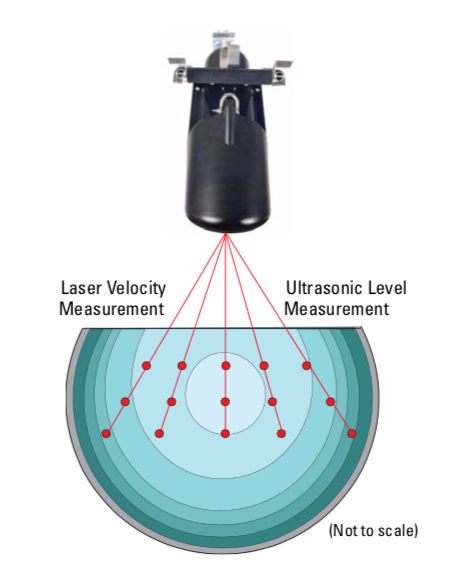
Figure 2: Multi-point/Multi-depth velocity method.
Site Challenges

Sludge buildup at the bottom of the channels and high sediment concentration in the flow streams were the major problems for continuous flow rate measurement. The performance of submersible, continuous wave Doppler sensors, previously installed at the site, had been adversely affected by site conditions and required costly maintenance.

Finding the Solution with LaserFlow

The Teledyne Isco distributor recommended using the non-contact LaserFlow sensor at the site. The conditions at the bottom of the channels were less than ideal for traditional flow monitoring. Being placed over the channel LaserFlow overcomes this. First, the unit’s built-in ultra-sonic level transducer determines the stream’s level. This is done by emitting an ultrasonic pulse and measuring the time it takes for the echo to return from the stream’s surface. By using ultrasonic level measurement the sensor can calculate a subsurface point at which to focus an optical laser. The frequency shift (Doppler shifting) of the returned light from the laser is proportionate to the water’s velocity. LaserFlow is able to measure velocities at up to fifteen points below the water’s surface. Being able to measure at multiple points minimizes the effects of turbulence and eliminates the need for manual profiling. Above average results are achieved by producing a level measurement and an exceptionally accurate mean velocity reading.

Measuring Results and Feedback
Influent Flow Monitoring
Figure 3: Flow Rate Measuring Results for four
inlet channels in dry weather conditions.

Thanks to its non-contact technology for velocity and level measurement, the Signature configured with a LaserFlow was capable of providing consistent and continuous flow rate results (Figure 3).

The end-user was able to reduce costs of service by limiting site visits to periodic inspections of the LaserFlow without the need for stopping flow, entering into the manhole and/or cleaning the sensors.

For more information, contact Instrument Specialties, Inc. by calling  407-324-7800 or visiting http://isi.group.

Applying Electric Valve Actuators: Needs Assessment

Electric valve actuator
Electric valve actuator (AUMA)
Electric actuators can be found in all varieties of shapes and sizes in waste water treatment plants.  Since the valves to be automated vary in both design and dimension, size consideration and design through an early "needs assessment" is a critical component of the specification process.

Defined as an explicit set of requirements to be satisfied by a material, product, or service, engineers, during this step, will specify what the solution will accomplish, without describing how it will do it.  Specifications usually originate from either design constraints or functional requirements.

As part of the spec requirements and need assessment, these are a number of the questions that engineers should consider, as early in the process as possible, in assessing the needs for a valve actuator.
  1. What sort of valve will be needed?  Does the process require linear control valves or rotary quarter turn valves?  This will define the appropriate type of actuator, as well.
  2. What is the specification for the actuator sizing? The size will need to match the needed thrust and torque as well as the type of valve.  The efficient actuator, to ensure good valve control, can be neither oversized nor undersized.
  3. What are the power requirements, e.g. how much energy will be needed to run the actuator?  Higher voltage actuators use more energy. Low power requirements mean that backup power is more economical.  In most settings, there is a need to save money by running as efficiently as possible, and there are also environmental sustainability hurdles. 
  4. Operating Conditions:  Is there severe weather or will the actuator be under water? What is the range of temperatures expected? Keep in mind that not all actuators can work in all conditions.
  5. Will the actuator need to run continuously or intermittently? Consider the variation needed in the process. Actuators that have continual modulation are more able to respond to variations in the control requests.
  6. Consideration of environmental safety conditions.  What about dust or explosive gases?
Ultimately, the needs assessment will help guide the specification process, with the goal of ensuring how well the final product will perform.  It will pay off to be as detailed as possible during this phase.  Once a needs assessment is finalized, you will be in a better position to specify the right actuator to meet your process requirements.

For more information on specifying electric valve actuators, contact Instrument Specialties by calling 407-324-7800 or visit their web site at http://isi.group

AUMA Electric Actuators Models SA and SQ: Setting the Limit Switches

This video below explains how to set the internal limit switches on the AUMA SA and SQ electric actuators.

AUMA is the world's leading manufacturer of electric actuators and gearboxes.
  • SA type actuators - range for open-close duty and positioning duty are rated for class A and B or types of duty S2 - 15 min. A special version for longer running is available for the S2 - 30 min duty.
  • The modulating actuators of the SAR range are rated for class C or types of duty S4 - 25 %. Special versions for S4 - 50 % and S5 - 25 % are also available.
  • SQ type actuators - range for open-close duty and positioning duty are rated for class A and B or types of duty S2 - 15 min. 
  • The modulating actuators of the SQR range are rated for class C or types of duty S4 - 25 %.
http://isi.group
407-324-7800

Instrument Specialties Inc. Appointed New Exclusive Rep for AUMA Actuators in South Florida Municipal Market

AUMA, the world's leading manufacturer of electric actuators and gearboxes has appointed Instrument Specialties Inc. (ISI) as exclusive rep for the South Florida municipal (water) market. AUMA distinguishes the municipal market as sewage treatment plants, water treatment plants, drinking water distribution, sewage disposal, seawater desalination and steel constructions for water systems to operate weirs and sluice gates.
AUMA actuators are ubiquitous in the water industry due to their broad product offering which includes multi-turn, part-turn, and linear actuators, combined with a robust design that includes high corrosion protection, long service life, and low maintenance.

For more information, call 407-324-7800 of visit http://isi.group.

Teledyne ISCO accQlink™ Provides Water and Wastewater Plants Modular and Flexible Remote Data Acquisition

Teledyne ISCO accQlink
The Teledyne ISCO accQlink™ accepts multiple inputs, including RS232, RS485, SDI-12, analog, and/or contact output. The robust design includes autonomous field operation using battery, solar, or permanent power sources.  Data is accumulated from a variety of sensor types, transmitted securely, and stored either in cloud storage and/or a customer server. Data can be easily integrated into the facility SCADA system, modeling software, business intelligence platform, ISCO Flowlink Pro, or other software.

ISCO cloud server allows for the viewing and management of data from anywhere with an Internet connection. ISCO cloud server also includes a graphical data management Web User Interface and can be programmed to send text or email alerts at preprogrammed thresholds.

During data transmission from accQlink™, a built in Global SIM card chooses the strongest available cell signal and cell networks, ensuring maximum uptime. A yearly service plant includes all cell phone charges, data hosting, and web user interface. Finally, the accQlink™ offers digital communication options such as LPWAN (Low Power Wide Area Network), Bluetooth, and Satellite.

Applications:
  • Overflow monitoring (CSO and SSO)
  • I&I, cMOM, ad other collection system monitoring
  • Wet well monitoring in Pump stations
  • Stormwater runoff monitoring
  • Weather monitoring
  • Water quality monitoring
Standard Features:
  • Rugged Design with IP 68 Enclosure
  • Data encrytion for cyber security
  • Cloud data hosting and intuitive Web UI
  • Automatic alerts via SMS and email
For more information about the Teledyne ISCO accQlink™ contact Instrument Specialties by visiting https://isi.group or calling 407-324-7800.

Flumes For Water System Open Channel Flow Measurement

fiberglass cutthroat flume open channel flow measurement
This cutthroat flume is one of several types of flumes
used to facilitate open channel flow measurement.
Image courtesy Tracom Fiberglass Products
The measurement of flowing water in an open channel can be facilitated by applying known methodologies and a specifically shaped restriction in the flow path. The restriction is called a flume.

A flume, as applied to open channel flow, is a fixed structure in the flow path that directs or restricts the flowing water in a manner that allows a measurement of the fluid depth at a defined point to be translated into a volumetric flow rate. There are several different types of flumes, each with a characteristic measuring procedure used to determine flow volume. Applications for flumes and their open channel flow measurement techniques are commonly found in agriculture, sewer systems, water treatment, and industrial effluent measurement stations.

Flumes can provide measurement accuracy suitable for many uses. Advantages are their simplicity, ease of maintenance, comparatively small footprint, and ability to measure large flows. Fiberglass flumes provide solid long term performance due to their corrosion resistance and smooth, easy to maintain, surface. Prefabricated units can be shipped to an installation site and easy installed.

Share your open channel flow measurement challenges with application specialists, leveraging your own knowledge and experience with their product application expertise.